Valorant Phoenix gameplay breakdown that sharpens your aim and movement
Video: 20 Minutes of Satisfying Valorant Clips
Want articles like this for your own video to promote it on YouTube and Google? Order them through the Telegram bot @sat_sit_bot. It writes articles around your video, embeds the video and publishes them on popular niche websites (no ads). Try it free: 50 articles on us.
· based on the channel Rawzu
Valorant is a 5v5 tactical shooter where two teams of agents fight over spike sites, and the fastest way to improve is to study how a high-level duelist actually moves, peeks and trades. Rawzu's Phoenix gameplay is a compact case study in that: aggressive entries, clean crosshair placement and a movement style that makes every fight look effortless. If you want the same reps live rather than in a highlight reel, watch Rawzu stream on Kick for daily games and the same Phoenix picks shown in the clips.
What makes Phoenix the right agent for aggressive Valorant players
Phoenix is an offensive Valorant agent who specializes in hunting down enemies while crippling their ability to fire back. His kit is built around winning the first duel of a round and then surviving long enough to take a second one.
- Blaze creates a wall that blocks vision and deals damage, letting Phoenix cross open, defended ground or cut a site in half before the enemy can set up a crossfire.
- Curveball throws a flash that blinds enemies even when they are tucked behind corners, which is why it works so well on tight chokes like Lotus and Icebox entrances.
- Hot Hands throws a damaging fireball that also heals Phoenix when he stands in it, turning a lost trade into a reset.
- Run it Back is the ultimate that lets him die, respawn at his marker and keep playing the round, which rewards players who take risky first contact.
Together, Hot Hands and Run it Back make Phoenix a very durable duelist, and players who like to play aggressively will genuinely enjoy this agent's gameplay. The catch is that durability only pays off if your aim and movement are already sharp, because Phoenix has no escape tool — he commits.
Rawzu settings and peripherals behind the Valorant clips
Rawzu's setup is deliberately old-school: a low sensitivity, a stretched 4:3-style resolution and a tiny static crosshair. Copying it will not make you aim like him, but it gives you a consistent baseline to test.
- Sensitivity: 400 DPI at 0.625 in-game
- Resolution: 1440x1080 stretched
- Crosshair: 1-6-2-2
- Mouse: Lamzu Maya X
- Mousepad: Zowie H-SR-SE 2 Blue
- Monitor: Zowie XL2566K at 360Hz
That 400 DPI / 0.625 combination is roughly a 40cm-per-360 turn, which is low enough for precise micro-adjustments but still fast enough to clear two angles in one swing. The 1440x1080 stretched resolution widens enemy models on screen, which is a common reason Valorant players prefer stretched over native — targets look bigger even though hitboxes do not change. A 360Hz monitor matters less for raw reaction time and more for tracking fast strafing enemies during Phoenix entries.
How the satisfying Valorant clips translate into real ranked habits
The clip format hides the boring parts, so the useful move is to extract the repeatable habits underneath the highlights. Across the compilation, three patterns show up again and again.
- Pre-aim before movement. Rawzu clears angles with the crosshair already at head height, so the flick is a small correction rather than a full swing.
- Use Blaze as a tool, not a shield. The wall goes down to split a site or block a common Operator angle, and Phoenix pushes through it immediately instead of waiting behind it.
- Trade aggressively with Run it Back. Because the ultimate returns him to a marker, he can take a 50/50 duel, die, and still be alive for the retake.
The one-taps and clean multi-kills people clip are the visible output of that routine, not a separate skill. The commentary moments in the compilation — teammates reacting to a stolen ace, a Sage shouting praise mid-round — are just what a coordinated lobby sounds like when the entry player is doing his job.
Common Valorant questions players ask after watching these clips
Most viewer questions after a Rawzu video fall into the same three buckets: settings, movement and whether the gameplay is even replicable in ranked.
- Settings. The DPI, sensitivity and crosshair numbers above are the full answer; there is no hidden config.
- Movement. The speed on screen comes from counter-strafing and wide-swings timed with Curveball, not from any movement exploit.
- Ranked reality. Enemies in ranked hold angles, use utility and shoot back, which is exactly why the habits matter more than the highlight reel.
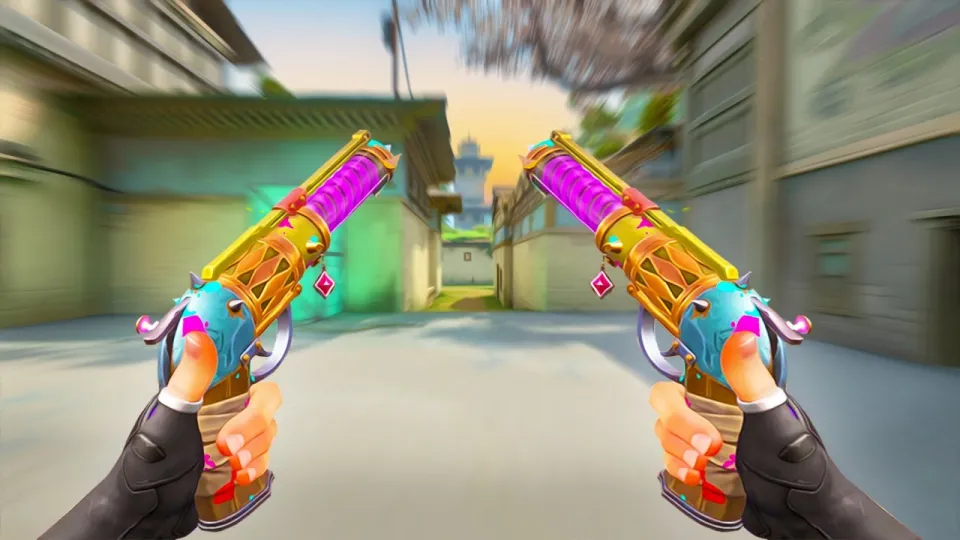
- Skins and feel. Weapon skins change nothing statistically, but a comfortable Vandal skin does reduce visual noise during fast entries.
If you are coming back to Valorant after a long break, the honest advice is to spend a week in Deathmatch and Swiftplay before ranked, because Phoenix punishes hesitation harder than most agents.
Useful links from the video
- Live streams, daily games and the same Phoenix picks: https://kick.com/rawzu
- Original music by Rawzu: https://open.spotify.com/artist/6DbATPR1PTNMx7U918bg1Q
- Community Discord: https://discord.gg/axnFwyvxp3
Final take on Phoenix and the Rawzu clip style
Rawzu's 20-minute compilation works because it shows a duelist playing the agent the way the kit was designed: take space, force duels, use fire to heal and the ultimate to erase mistakes. The settings are copyable, the habits are copyable, and the entertainment value is a bonus on top. If you want to see the same style played out live instead of in edits, the daily streams at https://kick.com/rawzu are the place to start. Treat the clips as a study guide, not a highlight reel, and Phoenix becomes one of the most rewarding agents in Valorant.
Key takeaways
- Phoenix is a duelist built to hunt enemies and deny their ability to shoot back, combining Blaze walls with Curveball flashes.
- Rawzu runs 400 DPI at 0.625 sensitivity on a 1440x1080 stretched resolution with crosshair code 1-6-2-2.
- Hardware in the setup: Lamzu Maya X mouse, Zowie H-SR-SE 2 Blue mousepad and a Zowie XL2566K 360Hz monitor.
- Hot Hands plus the Run it Back ultimate make Phoenix durable enough for repeated aggressive entries.
- The 20-minute Rawzu clip compilation leans on Lotus and Icebox moments, one-taps and fast movement.
Source: 20 Minutes of Satisfying Valorant Clips · Markdown version
Questions & answers
What sensitivity and DPI does Rawzu use in Valorant?
Rawzu plays at 400 DPI with an in-game sensitivity of 0.625, on a 1440x1080 stretched resolution. His crosshair is 1-6-2-2, and he uses a Lamzu Maya X mouse with a Zowie H-SR-SE 2 Blue mousepad.
Why do Valorant players use stretched resolution like 1440x1080?
Stretched resolution widens enemy models on screen, making distant targets appear larger and easier to track, even though the actual hitboxes are unchanged. It is a preference, not a competitive advantage baked into the game, and many players combine it with a low sensitivity for consistent crosshair placement.
Is Phoenix a good agent for aggressive ranked play?
Yes, Phoenix is designed for players who want to take first contact. Blaze lets him cross open areas safely, Curveball flashes enemies behind corners, and Run it Back means a lost duel does not end his round. The trade-off is that he has no escape tool, so a bad entry is punished immediately.
Can watching satisfying Valorant clips actually improve your aim?
Clips help mainly by showing repeatable habits: pre-aiming at head height, counter-strafing before shooting, and using utility to set up duels. They will not build muscle memory on their own, so pairing them with Deathmatch or Swiftplay practice is what turns the viewing into real improvement.